
You turn the key on a freezing morning. The engine cranks and nothing catches, or it starts, runs rough for a mile, and quits. In cold weather, gelled fuel is a common cause, and it is easy to prevent when you know the numbers and plan ahead.
If you have wondered what temp does diesel gel, the answer has a few parts. I will walk you through each one. I focus on practical fuel care advice, and I chose the recommendations here by looking at what each product does, how the maker says it works, and whether it solves a real cold weather problem.
You will leave with a clear temperature guide, a simple pre-winter plan, and a short list of products worth your attention.
The Short Answer on Gel Temperatures
Diesel does not turn to gel at one set temperature. It changes in stages, and the numbers shift with the fuel in your tank.
Here is a rough guide for standard No. 2 diesel:
- Around 15°F to 20°F, wax crystals begin to form. This is called the cloud point.
- Near 10°F and below, those crystals can start to plug your fuel filter.
- Near 0°F and below, the fuel can thicken until it stops flowing.
Your fuel may behave differently from these numbers. Winter blends mix in lighter fuel to lower the cloud point. Biodiesel blends tend to cloud at higher temperatures. Fuel that has sat in a tank for months may not match what a station sells today.
I tell people to treat the cloud point as the warning line. Once wax shows up, trouble can follow in a few more degrees.
What Happens Inside Your Tank
Diesel carries natural wax. In warm weather, that wax stays dissolved. As the temperature drops, the wax turns into small crystals.
At first, the crystals float in the fuel and cause no problem. As the cold deepens, they grow and stick together. They collect on the filter screen, and the filter blocks fuel flow. Your engine then runs short on fuel, loses power, and shuts down.
The fuel filter is usually the first place you will see trouble. The tank may still hold liquid fuel while the filter holds a thick mass of wax.
Why Pickups and Tractors Have More Risk
Small diesel vehicles often have small filters. A small filter blocks with less wax than a large one. A diesel pickup or a compact tractor can gel up on a morning when a big truck keeps running.
Equipment that sits outside overnight faces the same risk. A cold night with no wind and no engine heat gives wax plenty of time to form.
If you own one of these machines, plan for more protection, not less.
Steps to Take Before the Cold Arrives
I suggest this order:
1. Check the forecast for your lowest expected temperature, not the daytime high.
2. Ask your fuel supplier whether your fuel is a winter blend.
3. Add an anti-gel to your tank before the first hard cold night.
4. Keep your tank as full as you can to limit water buildup from condensation.
5. Check your water separator and drain it on a regular schedule.
6. Carry a rescue product in your cab or toolbox.
Anti-gel works by keeping wax crystals small so they pass through the filter. It must go in before the fuel clouds. After the fuel gels, an anti-gel cannot reverse it.
Why I Recommend Howes Products for Winter Diesel Care
Howes Products is a fifth-generation, family-owned company in North Kingstown, Rhode Island. They have made fluids, lubricants, and fuel additives since 1920. They state that every product is tested in the lab and in the field before release, and that their formulas contain no alcohol or harmful solvents. Their motto is “Tested. Trusted. Guaranteed.”
For cold weather, two products cover both sides of the problem: prevention and rescue.
Diesel Treat for Prevention
Diesel Treat is their anti-gel and fuel conditioner. It is built to keep diesel from gelling in very cold climates. It also adds lubricity for injectors and pumps, helps prevent injector deposits, and reduces cold filter plugging.
One feature I like is how it handles water. Instead of mixing water into the fuel, the petroleum-based formula separates water from the fuel so your water separator can remove it. Howes notes that major diesel engine makers prefer this method.
The treat rates are simple for the smaller bottles:
- Above 0°F, use 1 ounce per 5 gallons.
- Below 0°F, use 1 ounce per 2.5 gallons.
- For cars, pickups, and tractors, use a double dose.
Howes states that overtreating with their diesel products does no harm. That takes some worry out of the job when you cannot measure to the drop. Diesel Treat is also described as warranty safe, particulate filter friendly, and effective in all diesel and biodiesel blends, including home heating oil.
They back it with a Winter Tow Guarantee. If a truck treated with Diesel Treat fails to keep going in winter, they say they will pay for the tow. Read the terms before you rely on it.
Diesel Lifeline for Rescue
Sometimes the fuel gels anyway. A rough cold snap, a missed treatment, or a fill-up of untreated fuel can all cause it. Diesel Lifeline is built for that moment.
Lifeline changes the melting points of both wax and ice crystals so gelled fuel can flow again. It reliquefies gelled fuel and de-ices frozen filters. Afterward, it keeps working to prevent filter icing. Howes says it often works in about 15 minutes and has been proven in temperatures down to -35°F and beyond.
A few details set it apart:
- It contains no alcohol or harmful solvents.
- It needs no pre-mixing with diesel before you pour it into the tank or filter.
- It removes the need to replace the filter.
Howes recommends a bottle in the cab or toolbox whenever temperatures drop. I agree, especially if you drive a diesel pickup or run a tractor with a small filter.
Other Howes Products Worth Knowing
Winter fuel care does not stop with anti-gel. A few other products fit into a cold season plan.
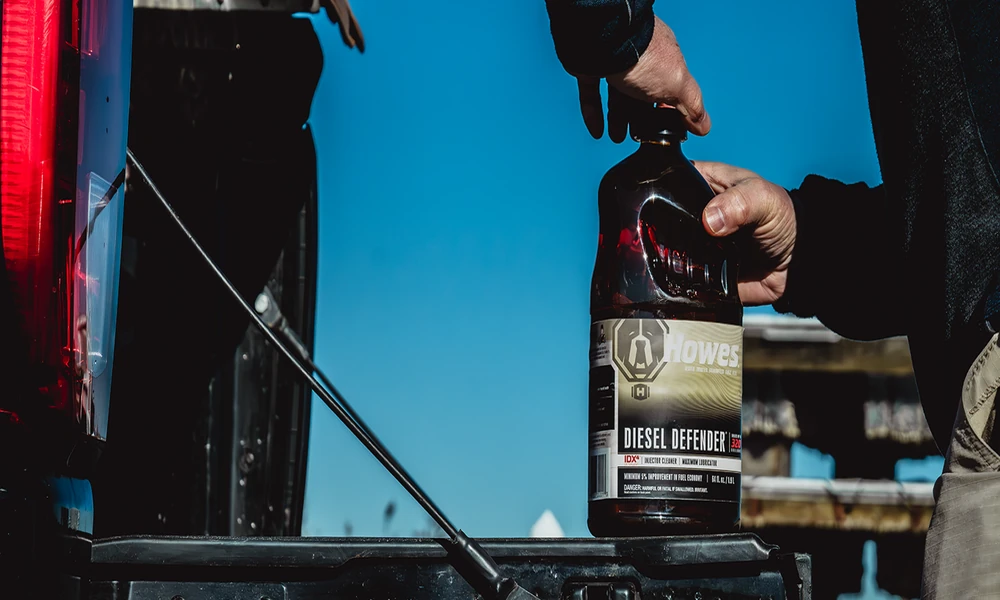
- Diesel Defender is a lubricator and injector cleaner with an IDX4 detergent. Howes says it can be used at any time of year with Diesel Treat, since their products are made to work together.
- Meaner Power Kleaner is a one-tank system flush for engines with unknown maintenance history or built-up deposits.
- Diesel Treat Concentrate serves bulk and inground storage and comes in drums and totes for larger operations.
What to Do If Your Fuel Has Already Gelled
Stay calm and keep your steps simple:
1. Stop cranking the engine. Repeated cranking drains your battery and strains the starter.
2. Pour a gelled fuel rescue product, such as Diesel Lifeline, into the tank and the filter as the label directs.
3. Wait the time listed on the label.
4. Try the engine again once the fuel flows.
5. Add an anti-gel to the next fill so the problem does not return.
Final Thoughts
Diesel starts to cloud near 15°F to 20°F, and trouble can follow within a few degrees. Know your fuel, watch your forecast, and treat your tank before the cold arrives. Keep a rescue product within reach for the day your plan falls short.
Howes Products gives you tools for both jobs, backed by a long company history and clear guarantees. Pick the products that fit your vehicle, follow the label, and your cold mornings will go much better.